
 English
 Arabic
 Chinese (Simplified)
 Canada
 Danish
 Dutch
 French
 German
 Italian
 Portuguese
 Russian
 Spanish
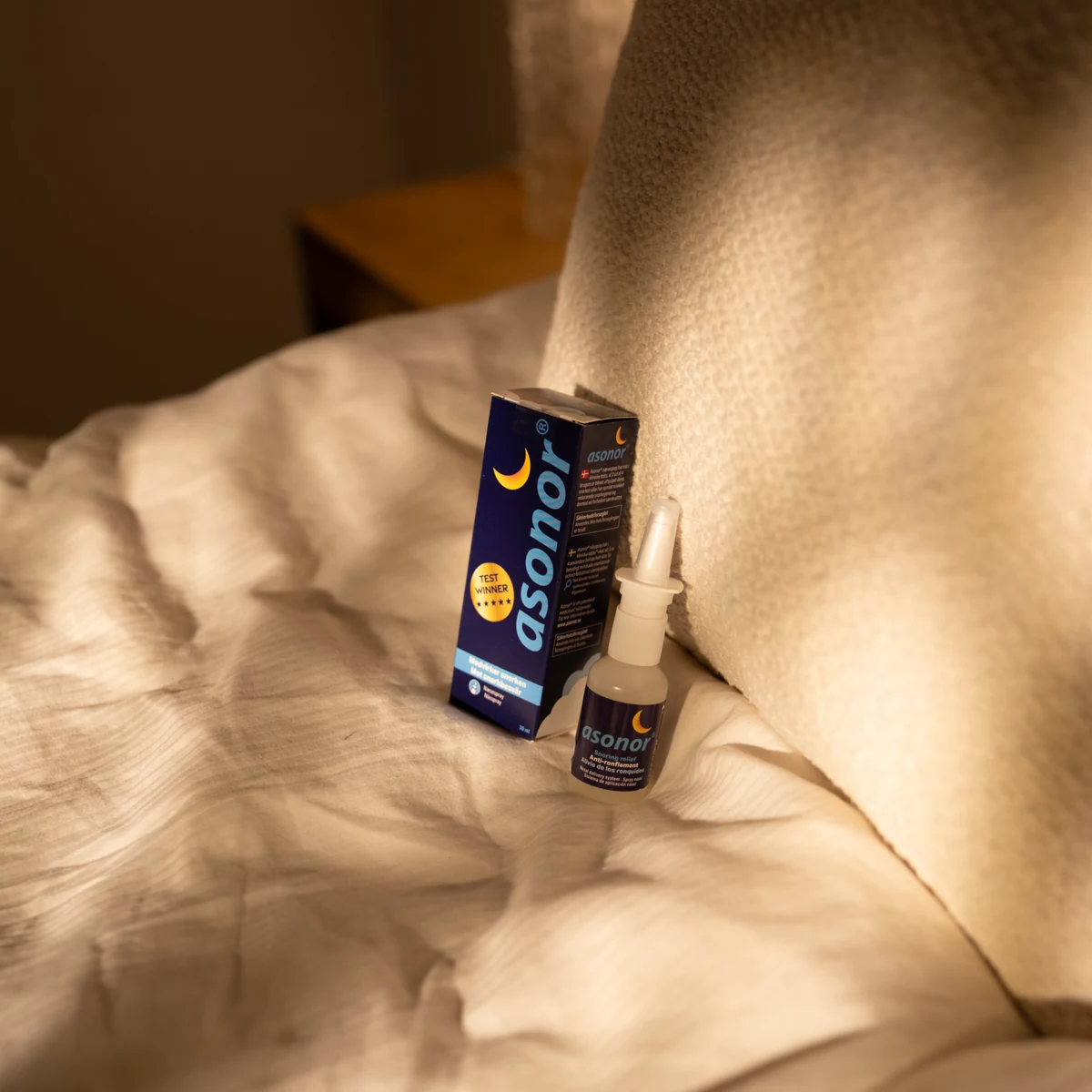
When the heating comes on and your nose feels stuffy, bedtime can become less comfortable—for you and the person beside you. If you notice more snoring during colder months, start by checking what has changed.
A blocked nose can contribute to snoring, while changes in temperature and humidity can trigger nasal irritation in some people. However, winter is not an explanation for every change in your breathing during sleep. The most useful approach is to identify your symptoms, make sensible adjustments and recognise when medical advice is needed.
1. Start with your nose
Before changing your bedroom or buying a product, ask yourself: Can I breathe comfortably through my nose at bedtime?
A cold, an allergy or non-allergic rhinitis may leave your nose blocked or runny. These conditions can feel similar, but the best approach depends on the cause.
If congestion keeps returning, ask a pharmacist or doctor for advice. Describe when it happens and whether it comes with sneezing, discharge or irritation. A pharmacist may suggest an appropriate saline nasal product or another treatment.
Follow the instructions for any medicine you use. In particular, using decongestant nasal sprays for longer than recommended can make congestion worse.
2. Check the air before adding moisture
Dry indoor air can irritate your nose and throat. But a humidifier is not automatically the answer—and should not be presented as a proven treatment for snoring.
A small humidity meter can help you find out whether your bedroom is actually dry. Mayo Clinic recommends indoor humidity between 30% and 50%.
If you use a humidifier, follow its cleaning instructions and avoid excessive humidity. Damp surfaces or condensation are reasons to reassess the setting. Too much moisture can encourage mould and dust mites, creating additional problems for people with allergies.
The aim is a comfortable bedroom, without making it damp.
3. Look at your sleeping position
Do you snore more when lying on your back?
For some people, sleeping on their side can reduce snoring. Try a comfortable side-sleeping position and ask your partner whether they notice a difference.
Treat this as a practical adjustment, not a diagnostic test. Quieter snoring does not establish whether your breathing is normal throughout the night.
4. Review your evening habits
Changes in routine can matter as much as the season. Consider whether your louder nights follow drinking alcohol or sleeping on your back.
Reducing alcohol, particularly before bedtime, is a sensible starting point. Smoking can also contribute to snoring.
If you take prescribed sleeping medication, discuss concerns with your prescriber rather than changing or stopping it yourself.
5. Keep a simple record
For a week, note:
- Whether your nose felt blocked at bedtime.
- Your usual sleeping position.
- Whether you drank alcohol that evening.
- Whether your partner noticed snoring or interrupted breathing.
- How alert or sleepy you felt the following day.
This is not a sleep study. It is a way to organise observations and make a conversation with a healthcare professional more useful. Do not wait to finish the record if you notice the warning signs below.
When should snoring be checked?
Seek medical advice if snoring is accompanied by breathing pauses, gasping or choking during sleep, or significant daytime sleepiness. These can be signs of obstructive sleep apnoea.
Also seek advice when snoring persistently disrupts your sleep or your partner’s sleep despite practical changes.
Do not assume that these symptoms are simply caused by winter, a dry bedroom or a blocked nose. An anti-snoring product or a change in bedroom conditions should not delay assessment.
Where does Asonor fit?
Asonor® is intended to reduce snoring through local lubrication and hydration of the mucous membranes in the throat. It is applied through the nostrils using a directed jet stream designed to reach that area.
Its intended purpose is different from treating nasal congestion. Asonor is not a treatment or cure for obstructive sleep apnoea.
If you are considering Asonor, start with the instructions for use and follow the current product guidance. You can also explore the Asonor FAQs for practical information about application.
A more comfortable night starts with understanding what is affecting your sleep. Check your surroundings, notice your symptoms and choose your next step accordingly.

